

 English
How to Clean Adirondack Chairs: A Practical HDPE Outdoor Furniture Care Guide
Sep 08, 2026A few months of summer use can turn a spotless Adirondack chair into a collection of pollen, bird droppings, spider webs, and gray mildew spots. Before you reach for bleach or a pressure washer, pause. Most Adirondack chairs clean up with nothing more than mild dish soap, warm water, and a soft brush, but the safe routine depends on the material your chair is made of. Getting that part right is the difference between a chair that lasts for decades and one that fades, cracks, or warps after a few seasons.
Why the Material Changes Your Cleaning Routine
Adirondack chairs are made from wood, vinyl, recycled plastic lumber, or high-density polyethylene (HDPE). The material determines how much abuse the surface can take and what kind of cleaner is safe to use.
Wood chairs need the most attention because the surface is porous, and any cleaner that is too aggressive strips the protective finish. Vinyl and resin chairs are more forgiving, although they can become brittle with age and may scratch if you scrub too hard. HDPE chairs are the most maintenance-friendly category: the material is dense, non-porous, and does not need paint or sealant, so cleaning is mostly about removing surface dirt.
| Material | Soap and Water | Needs Sealing | Pressure Washer Safe | Mold Resistance |
|---|---|---|---|---|
| Wood | Yes | Yes | Low pressure only | Low |
| Vinyl / resin | Yes | No | Low pressure | Medium |
| HDPE | Yes | No | Yes, at a distance | High |
What You Need for a Routine Clean
You do not need a garage full of specialty products. This basic kit covers almost every situation:
- Mild dish soap, free of bleach and degreasers
- Warm water in a bucket
- Soft-bristle brush or microfiber cloth
- Garden hose with a spray nozzle
- Clean dry towel
- White vinegar for mildew spots
- Baking soda for sticky grime
Step-by-Step Cleaning Guide
For a chair that is cleaned regularly, twenty minutes is enough. Follow these steps in order and you will not have to repeat any of them.
- Brush off loose debris with a dry brush so the wash step does not push grit into the surface.
- Fill a bucket with warm water and add a few drops of mild dish soap.
- Wash the chair from the top down, paying extra attention to the armrests and back slats where dirt collects.
- Rinse with a garden hose on a moderate setting until all soap is gone.
- Dry the chair with a clean towel and allow it to air dry fully before stacking or covering.
- Inspect the hardware while the chair is clean and tighten any loose screws.
Removing Mold, Mildew, and Stubborn Stains
When dirt has been sitting for weeks, or when humidity has triggered mold, routine soap and water often will not be enough. Start with the mildest effective treatment and work up from there.
White vinegar is a surprisingly effective mildew remover. Mix equal parts white vinegar and water, apply it to the affected areas, let it sit for five to ten minutes, scrub with a soft brush, and rinse thoroughly. The vinegar smell disappears as the surface dries.
For heavy mildew or dark staining, use an oxygen bleach cleaner. Oxygen bleach breaks down organic stains without the harsh side effects of chlorine bleach, which can dull colored plastic and stress some plastics over time. Test any new cleaner on a small, hidden area first.
A pressure washer works, but only when used correctly. Keep the nozzle at least 30 cm (12 inches) from the chair and use a wide, low-pressure fan pattern. Never direct a tight jet at joints, fasteners, or edges; even HDPE can be damaged by concentrated pressure.
Adjusting Your Care for Your Climate
Where you live changes how often you need to clean and which problems you will fight. Local conditions, not just normal wear, drive most Adirondack chair messes.
Humid and Rainy Climates
If your chairs sit in humid air or frequent rain, mold can form in shaded spots where moisture lingers. Clean them at least once a month, tilt the chairs so water does not pool on the seat, and keep the surrounding area free of fallen leaves.
Coastal Areas
Salt spray is corrosive to metal parts and can dull plastic surfaces. Rinse the chairs every few weeks with fresh water and wipe down any exposed hardware. If your chair does not already use stainless steel fasteners, fitting 304 stainless steel hardware prevents ugly rust streaks. For poolside setups and coastal gardens, an all-weather HDPE chair sheds moisture instead of absorbing it, so salt and humidity have far less surface area to attack.
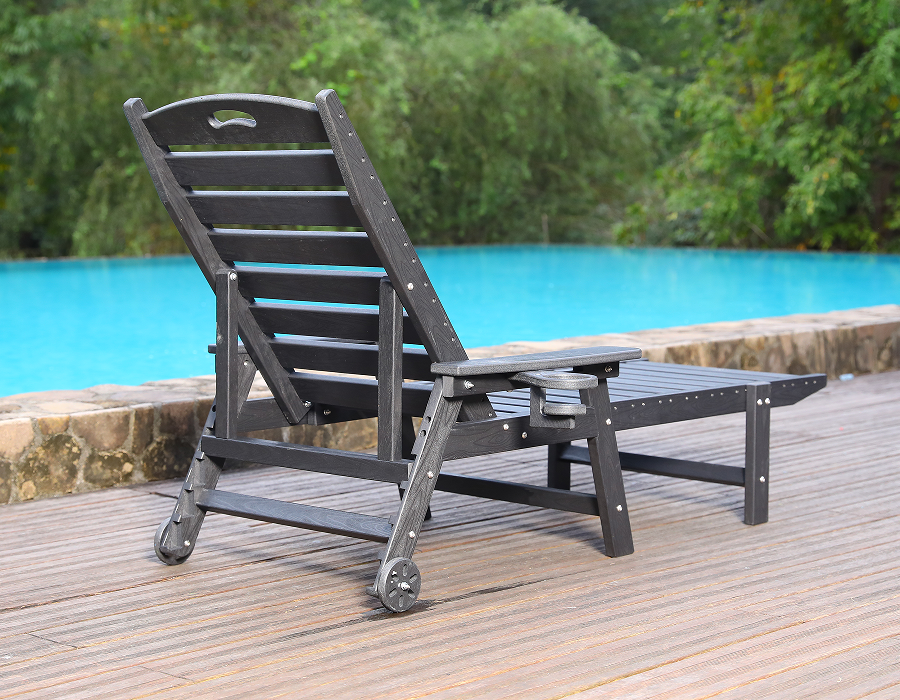
 Storm Gray HDPE Adirondack Frog Chair for All-Weather Use This all-weather HDPE chair resists salt spray and humidity, making it ideal for coastal and poolside settings. Its ergonomic frog design offers relaxed recline, while the low-maintenance material simply needs a dry brush and brief rinse to stay clean. View Product →
 Dry Desert Climates
Dust settles into the slats and acts as an abrasive when wiped across the surface. Use a dry brush first, then rinse briefly with water. In strong sun, UV exposure can fade colors, so cover the chairs during the harshest afternoon hours when they are not in use.
Snowy Winters
Clean the chairs and let them dry completely before winter storage. Store them indoors if possible; if they must stay outside, use a breathable cover so trapped moisture does not freeze against the surface. Keep chairs away from de-icing salt, which can corrode hardware and leave residue on plastic.
Why HDPE Adirondack Chairs Need Less Work
If you are buying new furniture rather than rescuing old chairs, material selection is the most effective maintenance strategy. High-density polyethylene is a dense, closed-cell plastic that does not absorb water, so mold and mildew have a hard time getting a foothold. It does not splinter, warp, or need sealing, which turns the annual refinishing chore that wood requires into a simple monthly wash.
The practical difference is significant. Wood chairs may need sanding and repainting every couple of years, while cheap resin chairs often become brittle and chalky after a few seasons in the sun. HDPE chairs keep their color and structure for years, and the cleaning routine stays the same from the first season to the tenth. Buyers who switch from wood or ordinary plastic often say they cut their cleaning time by more than half.
White chairs are the most demanding color because every stain shows. If you want that look, choose a chair made from solid-color HDPE instead of painted wood or coated plastic; since the pigment runs through the entire material, you never have to bleach or repaint to keep it white.
To understand why this material behaves differently from wood and metal, read this breakdown of the material advantages of HDPE chairs in outdoor furniture.
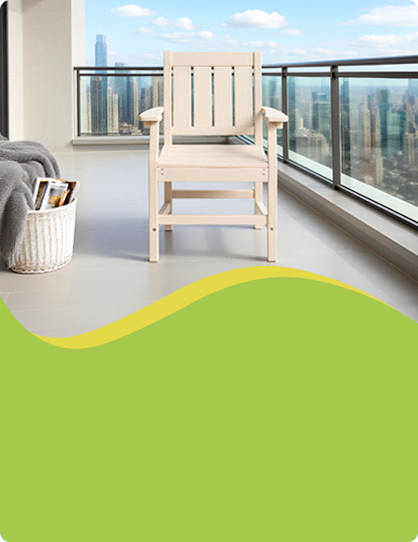
 Bright White HDPE Solo Adirondack Lounge Chair This compact solo lounge chair suits balconies and small patios, with a UV-stabilized finish that brightens in sunlight and repels stains. The material advantages of HDPE over wood and metal make it a smart pick for easy care and lasting appearance. View Product →
 A Simple Maintenance Schedule
If you remember only one routine, use this one. It combines regular cleaning with a quick seasonal check so nothing gets forgotten.
| Task | Frequency | Notes |
|---|---|---|
| Dry-brush debris | Weekly | Prevents dirt from grinding into the surface |
| Rinse with water | Every 2 weeks | Removes pollen and dust |
| Wash with soap and water | Monthly | Use mild dish soap and rinse thoroughly |
| Deep clean with vinegar | Seasonally | Target mildew spots and stains |
| Check hardware | Seasonally | Tighten screws and replace corroded parts |
| Store or cover | Before winter | Clean and dry fully first |
These steps work for any Adirondack chair, but they are easiest to keep up when the chair itself is built for outdoor living. The same soap-and-water habit that keeps an Adirondack chair clean also works for the rest of your patio. Use the same approach we describe for maintaining your patio dining set , and every piece of outdoor furniture stays presentable with one consistent routine. Once the habit is in place, you will spend less time scrubbing and more time actually sitting in the chair.
 Urban Gray HDPE Single Adirondack Lounge Chair Designed for city balconies and rooftops, this compact chair uses sound-dampening HDPE to reduce noise and a smudge-resistant gray finish. It pairs with a simple soap-and-water cleaning routine, keeping urban outdoor spaces presentable with minimal effort. View Product →
 Skontaktuj się z nami
Twój adres e-mail nie zostanie opublikowany. Wymagane pola są zaznaczone*
Kategorie
Kategoria produktu
Profesjonalna produkcja mebli

Zhejiang Xinyike New Material Technology Co., Ltd jest połączeniem przemysłu i handlu, specjalizującym się w produkcji i obróbka mebli z pianki PE i podłóg z pianki PCV. Nowocześni producenci mebli ogrodowych HDPE w Chinach.

- [email protected]
- +86-13511235540
- F/5, budynek fabryczny 3, park przemysłowy Xiaquan, ulica Lingfeng, kraj Anji, miasto Huzhou, prowincja Zhejiang (w obrębie Zhejiang Anji Changran Logistics Technology Co., Ltd.)
